%20(1)_edited.png)


The Foundations of Fandom: How Sports Franchises Break into New Markets

Updated: Feb 3
February 2, 2026
By Andre Lo

Courtesy of Alex Koroloff via Unsplash
One of the main goals of any sports league is growth, to expand the audience of the sport and grow the global profile of the game. Leagues will always seek to attract prospective fans by breaking into new markets. They tend to do this through one of two ways, either through expansion (where brand new franchises are created in entirely untapped markets) or relocation (which moves struggling and flailing franchises to other markets that may be more profitable and receptive).
When new sports franchises are founded, they have one sole purpose: To build a reason to exist. Unlike well-established teams, who can rely on decades of tradition and history for loyalty, new franchises start off with a blank canvas. Their success depends on how quickly and effectively they can craft a narrative, cultivate a following, and build a brand that resonates with the community.
Throughout the annals of history, we have seen teams establish themselves successfully as cultural pillars, whilst others fade into being an afterthought. From both the successes and failures, we can figure out the potential blueprint for a new franchise to be successful.
The Franchises that Got it Right
Anaheim Ducks: People love Nostalgia

Courtesy of Elsa via The National Hockey League
When Anaheim gained an NHL franchise in 1993, they utilized one of the more unusual yet effective methods to build their brand; they embraced the nostalgia and magic of Disneyland. A key thing that Anaheim is known for is Disneyland, and in the early 1990s, nothing engaged people (especially kids and young adults) more than The Walt Disney Company.
With Disney itself owning the franchise, they leaned into this spirit. Firstly, they named the team “The Mighty Ducks”, directly inspired by the hit Disney movie about a scrappy underdog youth hockey team. This association instantly gave the new franchise a personality of being fun, lovable, and easy to root for. This further built a bridge between the fans of the movie and hockey fans, who now both had a team to root for that resonated with them, even before they stepped onto the ice.

Courtesy of SportsLogos.Net
Disney doubled down on this approach. The logo of a duckbill hockey mask was cartoony, and the jade and purple color palette felt like it was straight out of a movie studio. During the opening ceremony of their first game, their mascot performed circus acts, whilst a variety of Disney characters skated on the ice with him. This gave them a distinct visual identity and a family friendly experience.
Vegas Golden Knights: Embracing Community and Capturing Success

Courtesy of Jeff Vinnick via Getty Images
When Las Vegas came into the NHL in 2018, the Golden Knights were trying to establish themselves in a city where there were endless amounts of tourism and entertainment opportunities for other consumers to pursue. But the Golden Knights understood what set the basis of being an attractive property, and they aggressively pursued it.
Firstly, they adopted the mottos “Vegas Born” and “Vegas Strong", which represented the city and those who were born in Vegas. This was a point of unification for locals, embracing themselves as true natives, and serving as a symbol of pride and honor.
Yet this motto carried a further meaning from a tragedy. On October 1st, 2017, 58 people were killed, and 867 people were injured as a result of a mass shooting during the Route 91 Harvest music festival on the Las Vegas Strip. The city, rocked to its core, was in a state of mourning. This added a whole new dimension to the mottos, as “Vegas Born” and “Vegas Strong" became the rallying cry for a city reeling and recovering from its loss.
The Golden Knights held a tribute to the victims and first responders before their inaugural home game, and hung a permanent banner in memory of the victims. Later that year, they retired the number 58 in honor of the 58 deceased victims from the shooting. The Knights players became involved with community initiatives, visiting the injured victims, hosting and participating in annual blood drives, and making substantial donations to the Vegas Strong Fund and Forever One Memorial. The “Vegas Strong Hero of the Game “ was established as a post-game tradition, where, during each home game, they recognized a first responder or a citizen helper by accompanying them onto the ice.
Beyond strategy, they understood how to win over audiences quickly: by putting on an on-ice product that was impossible to look away from. The Golden Knights were aggressive in their roster construction. During the expansion draft, they selected experienced veterans with proven track records instead of younger players with higher potential, going for a win-now mentality. But more crucially, they utilized the trade market to take advantage of teams desperate to get rid of bad contracts and protect valuable players, which led to them gaining valuable picks and prospects to build up their assets.
This aggressive strategy allowed them to be competitive in the present, which helped rack up attendance numbers, and in the future, which allowed them to be sustainable in the long run.
The Golden Knights became a symbol of hope for the city, carrying the light for the people during this dark time and giving them something to believe in. During their unprecedented run to the Stanley Cup Finals in their first year, a diehard fanbase was formed.
The Franchises that Never Found their Footing
Phoenix Coyotes: A Disaster in the Desert

Courtesy of Christian Petersen via Getty Images
When Phoenix gained a hockey team in 1996, the NHL hoped to tap into the potential markets in the South. What happened instead was a team that failed to gain any traction with a fanbase and soon floundered to sustain itself in the desert.
The first problem was the loss of one of the most passionate fanbases in the league. The team relocated from Winnipeg, a city where hockey is embedded into its DNA, to a city without any semblance of hockey tradition.
The loss of the Winnipeg Jets meant that the NHL lost a massive set of fans, who were reeling from the departure of their beloved team. The Coyotes, however, due to the distance between the two teams, couldn’t retain that lost fanbase.
The second problem was the inability to endear themselves to the community, which failed to replace the fanbase that they had left behind. After initially playing in downtown Phoenix, the team played its home games in Glendale, far from where casual sports fans lived. It simply wasn’t worth the drive, and attendance plummeted. Furthermore, there was constant tension between the city and the team. Due to consistent disagreements, poor behavior, and forfeited payments, they were kicked out of their home arena in Glendale and forced to play out of Arizona State University’s rink, a venue that fell short of the necessary standards for a professional stadium.
The final nail in the coffin was instability and lack of success. The Coyotes suffered from a rotating door of constant ownership changes, even becoming bankrupt at one point. When a bad owner was removed, a new one would just take their place, destroying any vision that the franchise had and creating an even more toxic environment.
Players themselves despised playing for the Coyotes due to the permanent state of chaos, tarnishing the franchise’s reputation even more. During this whole time, the on-ice product was horrible, with the Coyotes consistently being found in the doldrums of the league standings, with a roster that was filled with stagnation and disappointment.
The experiment was mercifully put to an end in 2024, when the franchise packed their bags and moved to Utah. The Coyotes became an absolute disaster in the desert, failing to give the city a reason to care about them.
Los Angeles Clippers: Trying to be Someone Else
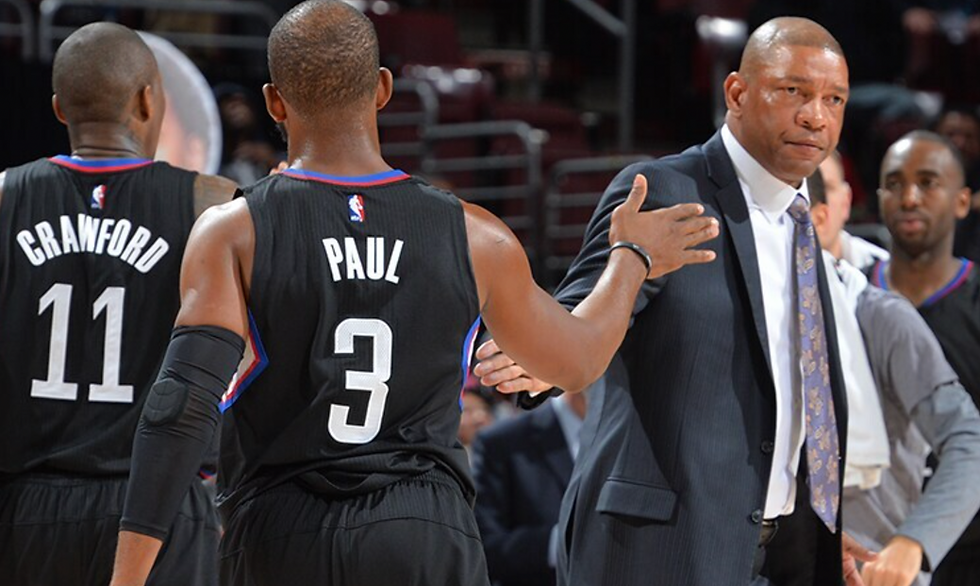
Courtesy of Rowan Kavner via The National Basketball Association
Since moving from San Diego in 1984, the Clippers have often been cited as the epitome of a terrible franchise. This reputation was shaped not only by internal failures but by the structural realities of operating in a Lakers-dominated Los Angeles market.
Los Angeles is a massive sports city with bucketloads of history, honor, and heritage. Known as “The City of Stars”, the glitz and glamor of the city have created a long line of iconic teams and legendary athletes. It’s a city built on star power and championship pedigree.
Ironically, this is precisely the Clippers’ problem. The presence of the Los Angeles Lakers, one of the most storied and identifiable franchises, has caused the Clippers to be categorized as “Los Angeles’ other team”. They were always second best.
The Clippers could never match their accomplishments, spending years trying to catch up to a legendary status that they never could.
They shared the same stadium and competed for the same audience. But without the legacy to back them up, they couldn’t build a fandom, attract media attention, or become relevant. Adding this onto the on-court mediocrity, the off-court racism and fraud scandals, and the general incompetence, the Clippers became a laughing stock
So what can we learn?
In order for a new franchise to succeed, the blueprint is clear.
Identity is king; the successful teams understood this first and foremost. The Anaheim Ducks embraced nostalgia and pop-culture familiarity. The Vegas Golden Knights embedded themselves in the emotional core of their city and took steps to cultivate a devoted and loyal following. On the other hand, the Phoenix Coyotes and Los Angeles Clippers show us that without the foundations of an identity or purpose, teams will fall flat and collapse, existing on without any real purpose.
With how globally attractive sports are, new franchises being formed are inevitable. But expansion and relocation aren't just about putting teams in new places. It’s about earning the trust of the fans, having an engaging story to tell, and proving that you deserve the right to exist.


Comments